Top-Rated Caribbean Food Denver Restaurants to Explore
Denver is not the first city most people name when they talk about Caribbean cooking, and that is precisely why the local scene caribbean food denver can be such a pleasant surprise. You do not stumble into great Caribbean food here by following tourist foot traffic alone. You find it by paying attention to neighborhoods, family-run dining rooms, lunch counters with a loyal weekday crowd, and menus that do not soften every spice or sweeten every sauce for a broad audience.
The phrase caribbean food denver often brings up the same practical questions. Where do you go for real jerk chicken instead of a generic grilled chicken plate with a spicy glaze? Which restaurants take their time with braised oxtail, stewed beans, fried plantains, and rice that actually tastes like it was cooked with intention? Where can you sit down for Cuban comfort food one night, then pick up a deeply savory Jamaican meal a few days later without feeling like you are eating the same dish in a different costume?
Denver does not have the size or density of Caribbean dining you would find in South Florida, parts of New York, or pockets of New Jersey. What it does have is a collection of places that reward curiosity. Some lean Cuban. Some focus on Jamaican staples. Others borrow from broader island traditions and adapt to local tastes, ingredients, and dining habits. The best among them still carry the signatures that matter most: layered seasoning, patient cooking, bright sauces, and a real sense of balance between heat, sweetness, acid, and smoke.
What makes a Caribbean restaurant worth the trip in Denver
A good Caribbean restaurant can survive on charm for a while. A great one cannot fake the fundamentals. You know you are in strong hands when the rice is not an afterthought, the beans have body, the plantains are cooked to the right point on the sweet-savory spectrum, and the proteins taste marinated rather than merely seasoned at the end.
That distinction matters in Denver, where many diners are still getting acquainted with the range of Caribbean cuisines. Too often, restaurants outside the region flatten those cuisines into a few familiar ideas: jerk seasoning, tropical fruit, maybe rum, maybe a pressed sandwich. Real Caribbean cooking is much broader. It reflects migration, colonization, trade, and adaptation. Spanish, African, Indigenous, French, and British influences all show up in different islands and in different proportions. The result is a region of cuisines, not a single style.
The strongest Caribbean restaurants in Denver tend to show that complexity in quiet ways. A Cuban kitchen may focus on slow-cooked pork, black beans, garlic, citrus, and a deeply satisfying sandwich pressed until crisp. A Jamaican kitchen often leans on allspice, Scotch bonnet heat, thyme, ginger, curry, and long braises that produce rich gravies. A broader Caribbean menu might move between patties, seafood, stews, fritters, yucca, tostones, and coconut-based sides without losing coherence.
One thing I have learned from years of eating in immigrant food communities is that side dishes tell the truth faster than the headline entree. If the cabbage has no life, if the beans are dull, if the fried plantains come out oily and lifeless, the kitchen is probably cutting corners elsewhere too. When the sides are excellent, the restaurant usually has discipline from top to bottom.
Denver’s Cuban anchors still matter
If you ask locals where to begin with Caribbean flavors in Denver, Cuban cooking often becomes the first stop. That makes sense. Cuban restaurants have had a stronger public foothold in the city than some other island cuisines, and they offer an accessible doorway for diners who may be newer to Caribbean food.
Cuba Cuba has long been one of the names people bring up first. Its appeal is not mysterious. A good Cuban restaurant offers immediate comfort. Pressed sandwiches, ropa vieja, roast pork, black beans, and rice work for both quick lunches and slower dinners. The flavors are generous but not obscure, and the textural contrast of crusty bread, tender meat, and bright pickles is hard to resist. In Denver, where altitude and dry air can make some food feel heavy or one-note, that citrus-garlic profile lands especially well.
The better Cuban meals in town also show restraint. They do not drown everything in sauce or rely on novelty. Instead, they focus on proper braising, seasoning that penetrates, and a sense of proportion. If you order a Cuban sandwich, the bread matters as much as the filling. If you order shredded beef, the broth reduction should carry some depth instead of tasting merely salty. If the black beans arrive silky and earthy, you know the kitchen respects the basics.
Cuban food is often the easiest on-ramp for people searching for caribbean food denver options, especially if they are dining with a group that has mixed caribbean food denver preferences. Someone can order a sandwich, another person can choose a plated entree, and the table can share yucca, plantains, or croquetas without much negotiation. That flexibility is part of why Cuban restaurants tend to stay in the conversation.
Jamaican restaurants bring the soul of the category
If Cuban food is often the entry point, Jamaican food is what turns casual interest into a real craving. A well-made Jamaican meal gives you layers that keep unfolding as you eat. First comes the smoke or spice, then the sweetness from caramelized edges or ripe plantains, then the depth of a curry or brown stew, then the grounding comfort of rice and peas.
In Denver, Jamaican spots can be especially rewarding because they often serve food that travels well. Jerk chicken, curry goat, oxtail, and patties all hold up during takeout, which has helped these kitchens build a following beyond their immediate neighborhood. On the best days, you open the container and the aroma hits before you even set the bag down.
Jerk is probably the most misunderstood item on many Caribbean menus. Real jerk is not simply hot chicken. It is a style of seasoning and cooking with a distinct profile, shaped by pimento, thyme, scallion, ginger, garlic, chile, and smoke. In many restaurants outside Jamaica, the smoke element gets lost. The seasoning can still be delicious, but when you taste a version with char, savory heat, and enough depth to linger after the first bite, you understand why people chase it.
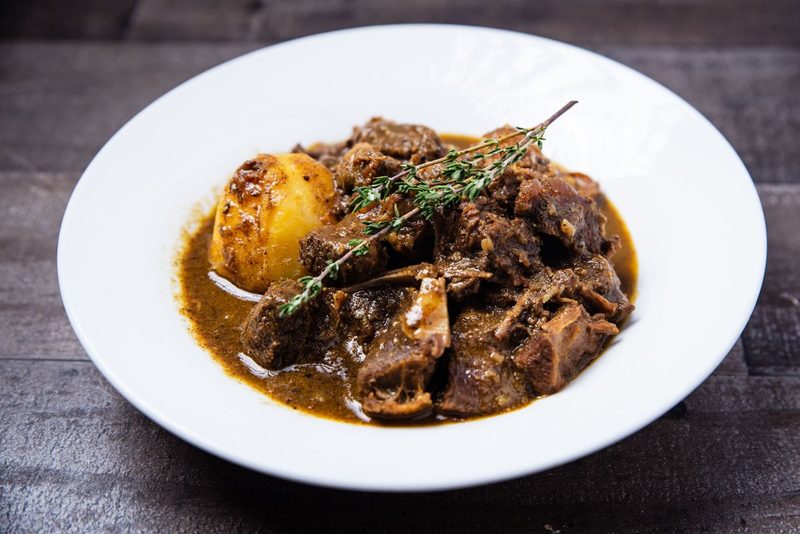
The same goes for oxtail. A proper oxtail plate is not light food, and it is not supposed to be. It should be sticky, rich, and softened by long cooking, often served with gravy that soaks into rice and peas. Denver diners who love barbecue, birria, or pot roast often connect with oxtail immediately because it scratches the same comfort-food itch while bringing a different seasoning vocabulary.
Curry goat can be a dividing line for new diners, partly because goat has a distinctive flavor and partly because a rushed version can turn tough. In a careful kitchen, though, it is one of the most satisfying things on the menu. The meat yields easily, the curry has warmth instead of harshness, and the whole plate tastes built rather than assembled.
The dishes that separate a memorable restaurant from an average one
If you are scanning a menu and trying to decide whether a place is likely worth a special trip, a few dishes reveal a lot about the kitchen.
- Jerk chicken, because it exposes whether the restaurant understands seasoning, smoke, and texture
- Oxtail, because it demands patience, proper braising, and balanced gravy
- Rice and peas, because bland rice is usually a warning sign
- Plantains, because timing and oil control matter more than many kitchens admit
- Patties or croquettes, because handheld snacks often show how much care goes into prep
There is a practical reason these dishes matter. They are hard to fake. A restaurant can buy decent bread, source passable proteins, and design a nice room. It cannot bluff its way through dry jerk chicken or lifeless rice for long, at least not with repeat customers.
I have had meals where the entree looked promising but the supporting cast made the whole plate feel flat. Then I have had modest-looking meals, served in a simple foam container, that completely overdelivered because every component was seasoned correctly. Caribbean food rewards that kind of attention. It is not flashy cuisine by default. It is cumulative cuisine. The pleasure builds from one well-made element to the next.
Neighborhoods and formats matter more than many diners expect
One mistake people make when searching for the best caribbean food denver has to offer is assuming the experience should look a certain way. Not every worthwhile restaurant has a polished dining room or a central downtown address. Some of the most compelling meals come from casual strip-mall spaces, lunch-focused counters, or hybrid operations that split business between dine-in service, catering, and weekend events.
That matters in the Denver metro because rent, seasonality, and customer traffic shape restaurant models in visible ways. A place with a short menu and irregular hours may actually be protecting quality. A family-run spot that sells out of oxtail or patties by early evening may not be disorganized at all. It may simply be cooking in realistic batches.
Aurora and other nearby areas can also be worth the drive. Many metro food scenes are stronger at the edges than the core, especially for immigrant-owned businesses. If your only rule is “must be downtown,” you are probably missing some of the city’s best cooking. I have seen this pattern across cuisines again and again. The glossy district gets the headlines. The outer neighborhoods get the regulars.
Denver’s altitude and climate add another wrinkle. Heavier braises, fried items, and rice dishes can feel especially satisfying during cooler months, while citrusy pork, seafood, and lighter sandwich-based meals shine in warmer weather. Caribbean food is versatile enough to work year-round here, but what sounds best in January may not be what you want on a 90-degree afternoon.
How to order well if it is your first visit
The smartest way to explore a Caribbean menu is to think about contrast rather than simply choosing the biggest plate. Rich mains become more enjoyable with fresh or starchy counterpoints. A spicy item often needs something mellow beside it. Fried foods benefit from a bright sauce or a less greasy side. A great meal is rarely one-note.
If I am visiting a restaurant for the first time with one or two other people, I usually build the table around a few points of comparison. One grilled or smoked protein, one braised item, one starch-heavy side, and one snack or appetizer tells you far more about a kitchen than ordering three variations of the same thing. It also makes the meal feel more social, which suits Caribbean food especially well. Many of these dishes are at their best when passed around, discussed, and compared in real time.
For anyone newer to the cuisine, these approaches tend to work:
- Pair a bold entree with a simpler side, so the seasoning has room to register
- Share at least one item with bones or gravy, because those dishes often carry the kitchen’s deepest flavors
- Order plantains even if you think you do not like sweet sides, the best versions convert skeptics quickly
- Ask which dishes sell out first, that answer is often more useful than asking for a generic favorite
A brief word on heat: do not assume every Caribbean restaurant is extremely spicy, and do not assume the opposite either. Heat levels vary by island tradition, by dish, and by house style. Some restaurants serve food with gentle warmth and offer hotter sauces separately. Others bake the spice into the marinade or stew. If you like heat but want balance, ask whether the kitchen’s hottest items are flavorful first and spicy second. Good restaurants will understand the distinction immediately.
What top-rated really means in a category like this
The phrase “top-rated” can be slippery. Online ratings are useful, but they are not the whole story, especially for cuisines that many diners are still learning how to evaluate. A restaurant might lose points from some guests because the service is relaxed rather than rushed, because a braised dish looks less photogenic than expected, or because a spice profile falls outside their usual frame of reference. None of those things necessarily make the food worse.
For Caribbean restaurants in Denver, I put more weight on repeat business, consistency, and menu confidence than on broad numerical ratings alone. Does the restaurant have a small but intense local following? Are people coming back for specific dishes rather than just posting a one-time novelty photo? Does the kitchen know its lane, or is it chasing trends that dilute the identity of the menu?
The top-rated spots in any immigrant food category usually share a few traits. They season assertively without becoming careless. They respect tradition without turning the menu into a museum piece. They understand what can be adapted for the local market and what absolutely should not be compromised. Most of all, they know who they are.
That self-knowledge matters because Caribbean food is easy to oversimplify for a mainstream audience. A restaurant that resists that urge tends to age better. Its food stays anchored. Its regulars stay loyal. Even when the menu evolves, it still feels like the work of the same kitchen.
The pleasure of finding a restaurant with a point of view
One of the best parts of eating Caribbean food in Denver is that the category still feels like a discovery. You are not usually walking into a restaurant optimized for mass-market trend chasing. You are more likely entering a place built around recipes, family habits, and a strong sense of flavor memory. That gives many of these restaurants a point of view you can taste.
Maybe it shows up in a curry that is darker and more savory than you expected. Maybe the beans are better than the meat, which is not a criticism but a sign that somebody in the kitchen understands humble ingredients deeply. Maybe the sandwich you ordered as a safe choice turns out to have the best roast pork you have eaten in months. Those small surprises are often what turn a restaurant from good to memorable.
I still remember one Denver meal where the standout was not the marquee protein at all. It was the rice, fluffy but cohesive, carrying coconut and stock in a way that made every bite feel fuller. Another time, a side of plantains arrived with just enough caramelization to hold sweetness in check. Both moments reminded me of a simple restaurant truth: you can tell when a kitchen cooks these foods because it knows them, not because it researched them.
Why the scene is worth following now
Denver’s Caribbean restaurant landscape may never be huge, but it does not need to be huge to be meaningful. What matters is that the food is there, evolving, and being cooked with enough conviction to earn repeat visits. For diners willing to look beyond the obvious neighborhoods and trust smaller operations, the city offers more than a token taste of the islands.
A strong Caribbean meal does something many other meals do not. It comforts without becoming dull. It can be celebratory, practical, casual, and deeply expressive at the same time. It fits lunch, takeout, family dinner, and late-week cravings equally well. In a city where dining trends can tilt polished and self-conscious, that grounded generosity stands out.
So if you are exploring caribbean food denver options, go in with appetite and a little patience. Order the rice. Order the plantains. Try the dish that takes time to cook. Pay attention to the places that may not shout the loudest but feed people with real consistency. Those are usually the restaurants that stay with you, and the ones you end up recommending without hesitation.
Reggae Pot Jamaican Grill
2243 S Monaco St Pkwy, Suite 104
Denver, CO 80222
(720) 410-2956
FAQ About caribbean food denver
What is a typical Caribbean meal?
Caribbean cuisines vary by island. A Jamaican meal might pair jerk chicken or oxtail with sides such as rice and peas, cabbage, or fried plantains.
What is Jamaica’s national dish?
Ackee and saltfish is widely recognized as Jamaica’s national dish. Check the current menu for availability.
Is Caribbean jerk the same as Jamaican jerk?
Jerk is a Jamaican cooking tradition associated with seasoning and slow cooking or grilling. The exact heat level and preparation vary by cook.